Saturday, August 8, 2015

The food chain--a cat's paradise

I've been thinking recently about "the food chain."

Humans like to think they are on the "top" of the food chain. I submit this is true despite recent efforts to make humanity "one species among many." Just as often as someone defends the dignity of man, based on reason or freedom or the ability to drive a car 500 laps in a circle and not usually crash, there is someone at least thinking that we're the best by the simple fact that we are more likely to eat than be eaten.

The food chain is supposed to look like this.
Plants.

We make them into bread, but we also intentionally feed them to other animals that we want to eat.
Then, we combine the two and eat them.
Herbivore + carnivore = omnivore.
Sure, some people decide to forgo eating meat, but that only proves the point--what other species consciously chooses not to eat a key part of its natural diet. Only the best, obviously.

Now, there are these folks--the top predators.

We don't normally eat them, and in some time periods, some situations, and some countries, we have real trouble with them eating us.
Still, we've by and large reached the point where, if we wanted to wipe them out, we could. And in fact we are to a significant extent doing that, by a combination of people who want to (because they face real threats from these predators) and people who don't mean to, but whose choices shrink habitat or otherwise impede their ecological necessities.

And you may have heard on the news, some of us still like to kill them just to show off.

But I haven't been thinking about this problem just because of that news. I've been thinking about it because my daughter's leg was looking like this:

(I couldn't put a real picture of bites--too gross).


Now, I know, mosquitoes don't "eat" humans whole.
But:
1) They kill a lot of people--an estimated 1 million people worldwide per year.
2) We could eradicate them, but only with really nasty pesticides that would harm us and a lot of other things.
3) We kill a lot of them when they bite us, but--trust me on this--there are always more!

But that doesn't mean mosquitoes--even the "Asian tiger" mosquitoes (interesting name) we seem to have in my area--are the top of the food chains.


 (Look out mosquito, the purple martin is coming for you).

And what eats birds? Well, mostly other birds, but that's not where I'm going with this.


The domesticated cat is the top of the food chain. Because they have allied with us, these cats benefit from all of the "we-kill-what-we-want-to" advantages that humans have. But they also stand as the things that eat the things that eat us.

This raises the question--did we domesticate cats, or did cats domesticate us? Did cats get together when we were getting good at teaming up on large predators and say, "The only way to conquer them is to make them our slaves"?

Now, domesticated cats are too small to actually attack us--this was the compromise they had to accept in order to carry out their plan and enjoy the population growth and protection that they've gotten as "pets." They could have tried to stay big and urge one another to act nice and domesticated, but as we all know, nobody can hold a cat to anything. Giving up their size advantage was the only option.

But, cat lovers, raise your hand if you think your beloved feline would hesitate to eat you if you accidentally shrunk-rayed yourself to mouse size?

You may protest that cats don't eat that many mosquito-eating birds. But that's not the point. They don't have to, because we serve their food up on a platter.

 Maybe we do this, not only out of interspecies-friendship, but to acknowledge the true heads of the food chain, who "graciously" deign to allow us to serve them.


Friday, April 25, 2014

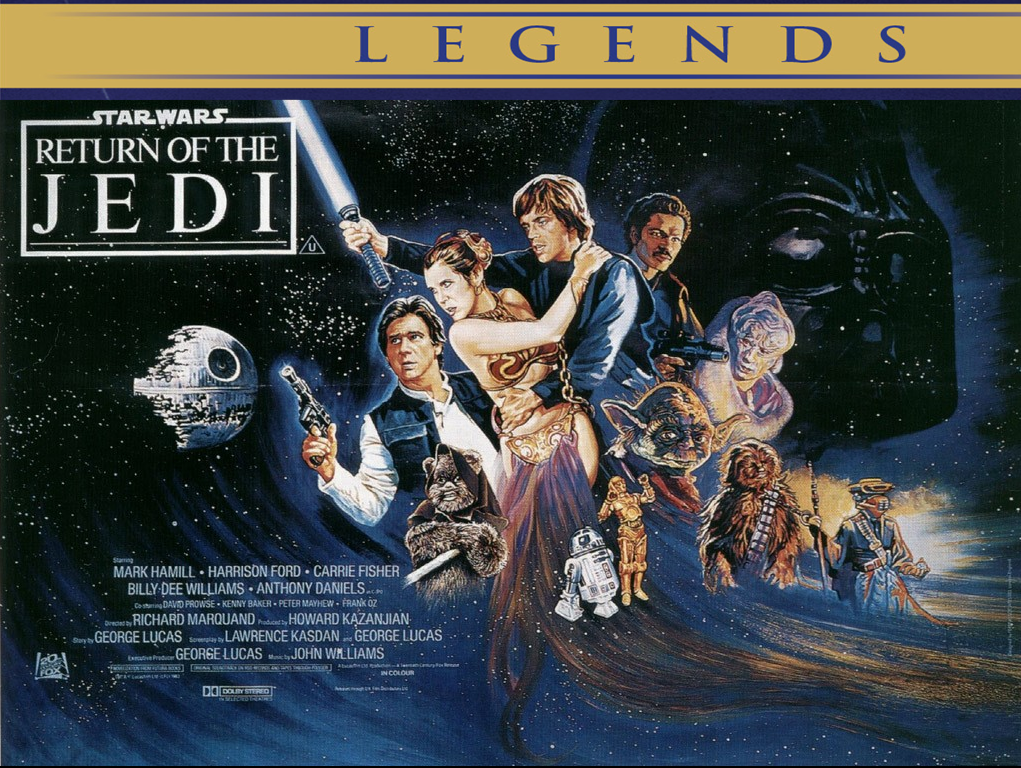
Lucasfilm and Disney Eliminate Return of the Jedi and Expanded Universe


Star Wars Return of the Jedi and its Expanded Universe have been retired. Also, expect a new cut of Episodes I through III at some point.

For years, like our universe, the Star Wars "Expanded Universe" universe expanded at an ever-increasing pace: comic books, animated series, conventions, bad holiday specials, video games, theme park rides, spoofs, tie-in novels, YouTube viral videos, Pentagon defense programs, and so on. Some of these filled in back-story on the Intergalatic Republic or Han Solo or certain Ewoks. But others, crucially, told the story post-Return of the Jedi, of Han and Leia's children as well as Luke's wife and child.

With new ownership from Disney and the plans for a new Star Wars movie trilogy covering the story of Han and Leia's children and any Skywalker wife and/or child, it was long expected that Lucasfilm would have to clarify the relationship between the Expanded Universe and its new film, along with the tie-in animated series, books, theme park rides, etc.

Here's the relationship: the new stuff voids the old stuff. You can still buy the old stuff, under the Star Wars "Legends" moniker, but it isn't canon or even quasi-canon. It could be fodder for future canon, but how many of those EU storylines will appear in the new Disneyfied Star Wars remains to be seen.

The stunner, though, was when a Lucasfilm spokesperson confirmed that everything following the iconic "Luke, I am your father" scene is also noncanonical, which includes the end of Empire Strikes Back and the entirety of the third film in the original trilogy, Return of the Jedi (also known as Episode VI), has also been deemed non-canonical.

"George Lucas always told Disney the only truly canonical works were the six films and the latest Clone Wars animated series," said spokeswoman Notta Realperson. "So we were going to go with that. But then Bob Iger [Disney CEO] and Kathleen Kennedy [new head of Lucasfilm] watched the alternative ending over at How It Should Have Ended on YouTube. I mean, have you seen that? After Luke's arm is cut off and he tries to get away by letting go and falling into the giant drop, Vader just grabs him by the Force and pulls him back up. And Bob and Kathleen said, 'yeah, that's what should have happened.' When George conceded he hadn't thought of that, and that it could have happened, we knew we had to go a different direction."

The full Lucasfilm statement further explains,
"While George Lucas tried to create a thrilling and coherent conclusion to his original Star Wars trilogy, we all know that trilogies are very difficult to complete. The new Star Wars timeline will thus erase such unfortunate elements such as the Ewoks and the greatest bounty hunter of all time, Boba Fett, being accidentally killed by a temporarily blind guy. With the new timeline, we have a chance to create a believable logic to the Star Wars Universe like never before. Elements of the 'Legends' Return of the Jedi, like Han and Leia's love story or Luke's face being half-lit so that it is also half-dark, will of course be retained."

As it would be difficult to re-make Return of the Jedi while also making a new trilogy of movies, the re-told third saga of the original trilogy will be retold first in exciting new entries in the Star Wars encyclopedia, Wookiepedia, which will be followed by video games, novels, and the like. As for what to expect from this revised storyline, spokeswoman Notta Realperson commented:

"The details aren't all set, but it's a fantastic storyline. Because Darth Vader has Luke in custody but Luke won't turn to the Dark Side, the Emperor orders Darth to kill his son. When Vader refuses, we get an actual Star War between those elements of the Empire that side with the Emperor and those that follow Vader. On a large scale, that means the Rebellion will be able to step in after a bloody civil war, which when you think about it makes a lot more sense than their little fleet taking over the vast empire by itself. On a human scale, you have Luke's struggle to win over his father while not falling into Darkness himself, and there's plenty for all the other characters to do as well. But it's probably worth mentioning that Boba Fett doesn't die and plays a bigger role than ever."

In a further clarification, Lucasfilm explained that, despite some fans' hopes to the contrary, the events from Episodes I through III are still canon. However, the dialogue would all be re-written and re-dubbed by Disney lackey Joss Whedon, director of Avengers, Avengers 2, and some other obscure but cool stuff. Spokeswoman Notta Realperson explained, "Once we determined there was not an opportunity for a Marvel-Star Wars crossover, we looked for other ways to utilize our cross-brand talent. Bob and Kathleen noted that a lot of the lines in Episodes I through III are real clunkers, and that Joss is the best snappy comeback writer in the business."

Most of the Episode I through III actors will reprise their roles as voice actors, but there will be some notable exceptions. Robert Downey Jr. is rumored to be replacing  the voice of Jar Jar Binks. An unnamed source close to the Iron Man quoted him as saying, "They could never afford me, but my kids just begged me to help fix those films. And who can disagree--if you could just replace Jar Jar with someone actually funny, how great would Episode I be?" Ewan McGregor and Natalie Portman, both of whom are dying to be in Episodes VII through IX but whose characters are, in fact, dead, are among those expected to return for the re-dubbing.

Also, it should be remembered that many people have sunk a whole lot of their time, energy, and money into those Expanded Universe properties as well, and Lucasfilm has tossed all of that aside. Lucasfilm acknowledges that kind of sucks, but not enough to actually apologize. Instead, they've created a video that memorializes the now-obsolete content which they still hope to sell. "A lot of people love the EU," commented the spokeswoman Notta Realperson, "I mean, probably more people than love the actual European Union-EU. It means a lot to me personally; I was named after Notta Karr, who is better known as the Old Republic Jedi Atton Rand. You know, 'Jaq'? You don't know? Look, a lot of people know what I'm talking about. Really, it's a lot of people. Really."


Monday, April 21, 2014

Family and Identity: Changing Last Names for Marriage


In a clearly-written entry at the Huffington Post entitled Why I'm Not Changing My Last Name for Marriage, "Reflective Bride" explains why she isn't changing her surname for marriage. The dubiously patriarchal background to the practice of women taking their husbands' surnames is one reason, but not the main reason; the main reason is that she feels attached to her name is "my name is my identity." She is not changing her name, above all, because "I just don't believe in changing one's identity for marriage." She juxtaposes this conviction with her friends' rejoinder that having the same last name is "nice." I want to spell out reflectively what might lay behind her unreflective friends' sense of "niceness."

http://www.huffingtonpost.com/reflective-bride/why-im-not-changing-my-la_b_5172581.html?fb_action_ids=712621948784595&fb_action_types=og.likes

While I agree with several points in her article, whether or not a woman or man do change their names when they marry, I think this reason reflects a misunderstanding of what marriage is. In short, you cannot marry without altering your identity, whether you change your name or not--and if you are not willing to be altered, you are not really getting married. Stephen Sondheim has a wonderful song about marriage without personal alteration in his show Company, entitled "Marry Me a Little."

Marry me a little
Love me just enough
Pure and clear and easy
Just the simple stuff
Keep a tender distance
So we'll both be free
That's the way it ought to be.

This doesn't work out too well for the protagonist, and he comes to a more realistic understanding later:

Somebody need me too much.
Somebody know me too well.
Somebody pull me up short,
And put me through hell,
And give me support,
For being alive.
Make me alive.
Make me alive.

But saying that marriage requires personal sacrifice isn't the same as saying it requires sacrificing one's identity. Women aren't "chattel property" after all. And even Sondheim's lyrics don't get at the heart of what's really happening in marriage, because the horizon still seems to be of marriage as an interaction of individuals, when in fact the essential dimension of marriage is the formation of family.

Consider Reflective Bride's definition of a wedding (and this is from a woman who is a wedding blogger): weddings "bring together family and friends, celebrate your love, and are an excuse for an awesome party." But weddings don't just "celebrate your love," although they do that. They celebrate the formation of a new nuclear family, which then carries with it various relationships to existing maternal and paternal family members. Fathers and mothers "don't so much lose a daughter as gain a son" (and vice versa). Weddings anticipate or bless the existence of grandchildren who will belong to both family lines.

In more traditional societies, what I'm referring to as "formation of family," was rather more like "the continuation of family." In patriarchal societies, this would mean the wife leaving her father's house and joining her husband's father's house. Each "nuclear" family unit was less like a start-up firm and more like a subsidiary of a larger firm that might, perhaps, rise to be the governing force of the larger family, but otherwise perpetually remained beneath it. I know there were also matriarchal and matrilineal societies and many variations, all of which I have forgotten if I had ever read about them. But it seems safe to say that the nuclear family as a mostly independent entity is historically unusual, and thus we cannot speak of the "traditional" family except insofar as we "receive" that tradition, preserving its best traits while casting a critical eye towards what came before.

The subjugation of women in this tradition deserves such a critical eye, so I think Reflective Bride is right to challenge men to ask, "Why wouldn't you change your name?" If a man can't reflect on the tradition enough to have a reason he expects his wife to change her surname--while he would never consider changing his--then he can hardly answer the challenge of sexism. What I am arguing is that forming a new nuclear family is the creation of a unity to which each of the partners needs to learn to subjugate their own individual identities (although only to a certain extent) for the good of the whole.

Thus, even if the "maiden name" assumption is challenged, the problem still remains: how do you take two disparate people and forge a single unit--the family, that is, the nuclear family. Or rather, how do you recognize that this is what you are doing when you marry? A common and very fitting way to recognize this union is the assumption of a single surname.

It would almost seem fitting, in the era of nuclear familialism, to come up with an entirely new name just for these two people and any offspring they beget or adopt. But I've never heard of anyone actually doing this in part because modern kinship ties, though weaker than ever, still count.

Indeed, the personal identity we carry in our surnames is generally built upon our family history, for better or for worse, for richer or for poorer. This is because our "personal identity" is never merely individual, but always comes from somewhere and points somewhere. Reflective Bride acknowledges that the name she wants to keep is "her father's name," but simply says that this unchosen origin of her name is now irrelevant because "that's who I see myself as." But if we acknowledge that in fact, our surname is familial, that is represents that part of ourselves which (unlike a first name or middle name or nickname) belongs to others, then changing it is simply an acknowledgment of a new belonging that has to come first, ahead of other belongings. I suggest that this sense of unity, of belongingness, is what is so "nice" for her friends about taking their husbands' surname. We are no longer merely you and me, we are also we.

In my own experience, this use of surnames is very much in evidence. We talk all the time about the Richardsons or the Flaherties, and my wife and I get called jointly by our surnames all the time. Never is this taken to mean, "Mr. Richardson and his chattel," still less, "the slaves or possessions of Patriarch Thurber." It allows these families to be seen linguistically as what they are--units. So much so that with marriages who did not take the same surname we tend to mash them up into funny shipping titles ala "Bennifer."

This doesn't make the traditional presumption of taking the patrilineal name any more equal, and so, as Reflective Bride observes, there are a number of more or less satisfying solutions that are tried, mostly involving hyphenation. For anyone who cannot stand this historical inequality, or who has compelling reasons not to take their spouse's name (such as professional name-branding, or any of the other hypotheses lobbed at the Reflective Bride as to why she is keeping her inherited surname), the need for a single surname is not overwhelmingly compelling. But it is sufficiently fitting that we should not bat an eyelash that the presumption is for a name change, whether or not it is "old-fashioned."

Also, cultural expectations shouldn't be completely ignored--if everyone is driving on the right side of the road, it's what people expect. A family with one son may be hurt if he "abandons" the family name, whereas the "surprised" family whose daughter and her children keep their family name may not have invested as much in the possibility. Whereas following tradition generally garners a shrug, breaking it may be seen as a personal slight.

My personal opinion is that men and women looking at marriage should weigh all of these considerations, and that men should look at taking their wives' names or hyphenating their name and having the kids bear their wives' surnames. And then men and women should look at retaining a name professionally while using the family surname in their private lives. By "all of these considerations," they could be wide-ranging and include many things Reflective Bride mentions--being much closer to one side of the family or another, the reactions of extended family, how the names sound together, weeding out particular unfortunate surnames, and the like. The safest route, if taking the husband's surname is problematic, may be for the wife to keep her surname rather than doing something unusual that might offend the family. In my own case, had I taken my wife's surname, I would have had the same name as a rather notorious politician.

None of this means that the woman (or man) should be subsumed into the other. Unlike the practice of referring collectively to the "Coxes," the practice of calling a woman Mrs. John Smith--of subsuming her identity entirely--could be confined to irrelevance; I think it already sounds merely old-fashioned anyway. In any case, I am unaware of any contemporary women who have literally given up their first and middle or any other names, so that the couple became referred to as "Kevin and Mrs. Kevin." That's because the taking of a surname only touches part of one's identity, while the most personal of portion of our identity--the first-name basis--remains wholly our own.

To begin to wrap up, my argument could be said to break apart on the grounds that postmodern families are "blended" and thus already past the nuclear familialism I have presupposed, and that the notion of the nuclear family as a "unit" or a "whole" is "old-fashioned." I will respond that, in the absence of the notion of a common good that is larger than either spouse, sacrifice and benefit become a zero-sum game between the spouses, such that the best that can be achieved is a constant attempt to be fair and equal. Should this mutually beneficial arrangement break down, such as when one spouse suffers illness or injury and can't "pay their fair share," even a relatively good marriage itself may break down with it. A marriage, on the other hand, that has become "we" (without subsuming either I, but acknowledging that each's identity has been changed in important ways) can instead hope all things, believe all things, love all things, and endure all things. Surnames don't accomplish all this, of course, or even very much of it, and a family of many different surnames and personalities can certainly become a unit. But, I'll use that word again--having the same surname is fitting to it.

In conclusion, Reflective Bride notes at the beginning of her article that marriage "doesn't feel any different" for her. I have to say that my experience was completely the opposite, and not just because of the old-fashioned mores respected by my wife and I, which kept us from living together and other intimacies. I knew that my life had changed, even though my name had not changed, because this woman had entrusted her life--even her name--to me, and that she was my responsibility as much as I became hers. For as long as we both shall live, my identity is forever changed, and I have no hopes (or fears) of recovering "who I am" apart from her, but rather walk side-by-side with her towards my destiny through the concrete sacrifices of the family life we live together.


Saturday, March 29, 2014

Cabin in the Woods: A Very Funny Dystopia Where Hope is Extinguished


I appreciate dystopian fiction; this may be another reason I’m just an overgrown adolescent. I don’t much care for “horror” films, particularly “torture porn” films like Saw, and so I watched Cabin in the Woods (2012) more because of its producer, Joss Whedon, and its good critical reception. I knew Cabin was something of a “deconstruction” of the horror genre, and I was not surprised to find it working as a metaphor for filmmaking, but I was not expecting it to be a play on dystopian fiction as well. The connection between this film and dystopia has drawn relatively little comment in online reviews, and so I want to explore it, but this requires working through the metaphor for filmmaking. In the end, I will argue (at unnecessary length, perhaps) that it fails as a dystopia because the filmmakers violate that genre’s positive aspects even as they lampoon others for cheapening the horror genre.

If you haven’t seen Cabin in the Woods and don’t want to know about the ending, stop reading now. 

AKA “SPOILER ALERT.”

There would be no plot and a lot less humor without the stuff of horror movies; specifically, the group of young people—the Good Girl, the Alpha Male, the Stoner, the Scholar, and the Whore—who head out to a remote location to be slaughtered by an unholy terror. But ultimately, The Cabin in the Woods belongs in a category with The Matrix and The Hunger Games even more than with Scream or other meta-horror fiction.

The priority of the dystopian layer over the horror layer is established in the very first scene, when a pair of apparently non-descript workers—Balding Guy and Married Guy—chat about mundane, everyday things (trying to have a baby) in a sterile building that might be a science Facility (actually the British Columbia Institute of Technology's Aerospace building). I view this as deliberate; director Drew Goddard and Whedon could have chosen the path of slowly revealing that something more organized and sinister lay beneath the “cabin in the woods,” but instead they begin in the Facility where this horrible experiment is manufactured. (Consider also that the college students’ inane discussion of leaving their books behind centers around texts on the Soviet Union).

Opening with the Facility is also a good dramatic choice, because the filmmakers tease the audience with hints about the Facility’s motives and only slowly peel back what is truly going on. The mystery created by the Facility’s outsized surveillance of five apparently ordinary college students allows the filmmakers to play the typical horror mechanisms of foreboding (creepy camera angles, an unpleasant local man known as “the Harbinger”) for laughs.

A Metaphor for Filmmaking

In short, what may at first appear to the young protagonists as a nightmare encounter with forces beyond human reckoning is in fact heavily manufactured and carefully planned. All of this is a metaphor, of course, for filmmaking; horror filmmaking in particular. The various departments mimic the various teams required to make a film. All of these departments at the Facility bet on a big white board about which monstrous force will be unleashed—what will it be this time? Zombies? Witches? Giant Snake? Clowns? Sugar Plum Fairy? Kevin? The young people who are to die make the choice themselves, through a hilariously extensive set of creepy artifacts in the cellar of the cabin in the woods. One can imagine a group of movie producers sitting around and asking one another: what horror do the young people want this year? Zombies are the new thing; oh, wait, they are passé. What’s the next zombies?


There’s a running joke about how one of the two heads of the Facility always wants to see a merman be chosen, but it never is. (And when did you last see a merman in a horror film? Me neither). Our young protagonists end up with “redneck torture zombies,” which is “a whole different species” from regular zombies and is a dig at the current “torture porn” trend in horror movies. Whedon commented: “The things that I don’t like [about the horror genre] are kids acting like idiots, the devolution of the horror movie into torture porn and into a long series of sadistic comeuppances. Drew and I both felt that the pendulum had swung a little too far in that direction.” http://www.totalfilm.com/news/joss-whedon-talks-the-cabin-in-the-woods

The bad writing in horror movies appear in the film as deliberate interventions of the Facility. None of these college students is the required Whore? The chemicals in one girl’s blond hair dye slowly seep into her brain, causing her to act that way. When the Alpha Male (an appealing Chris Hemsworth, aka Marvel’s Thor) sensibly says, “From now on, we stick together,” he is gassed into confusion which prompts him to say, “No, wait, we should split up to cover more ground.”

The Audience as All-Demanding Gods?

As the movie unfolds, we learn that the secret behind this elaborate “experiment” is actually a modern, high-tech version of the traditional virgin sacrifice. (Nevermind that the “good girl,” Dana, isn’t really a virgin. “We make do with what we have,” someone from the Facility explains). The ancient gods demand this elaborate ritual or they will destroy the earth, and the Facility is just there to appease them. If the horror is carefully orchestrated, then underneath it is an uncontrollable chaos threatened to be set loose. These “Ancient Ones,” as they are called in the film, are a callback to one of the progenitors of modern horror, H.P. Lovecraft.

As blogger Jason Colavito observes, “It takes little imagination to see in this the Old Ones of Lovecraft, who wait beneath the earth for the stars to come right again, though in their August Derleth-derived form as emissaries of evil. Nor is this the first time that Whedon has used this trope; in Buffy: The Vampire Slayer the Old Ones were the progenitors of the first vampires and also waited beneath the earth for the time when they could reign again, etc. http://www.jasoncolavito.com/1/post/2012/04/on-josh-whedons-cabin-in-the-woods-h-p-lovecraft.html

The fact that these Ancient Ones have such a demanding specification for how the ritual sacrifice is performed—the other four college students must be killed before the virgin, who is allowed to survive so long as she has suffered—has led many to rightly observe that the Ancient Ones are a metaphor for the horror genre audience. (A particularly clear explication of this comes from a blogger named Nordling at http://www.aintitcool.com/node/54997) In this reading, the individuals in the Facility are the filmmakers, and their cynical manipulation of the events in the woods is an obsequious kowtowing to what they think the audience expects—the arbitrary and often ridiculous strictures of a genre.
In the final act, the ridiculousness of those strictures are amplified. Stoner and Good Girl descend into the lab, where they find that all of the supernatural creatures that appeared earlier on the big white board are trapped in glass elevators. They find a way to release these creatures, and the various evil beings tear through the Facility killing everyone in sight. And yet, despite all this bloodletting, the gods are not appeased. It has to be the Stoner who dies.

This is also brilliant as metafiction. The characters, disgusted at how they have been treated by the filmmakers, turn on them. Artistic death comes to filmmakers when the creations of imagination—the ghouls that they cynically employ to obtain their success—turn on them and devour them. For instance, it’s the merman himself who kills Married Man. The final killing of “the Director” comes from one of the “redneck torture zombies,” who personifies those worst trends in horror filmmaking.
Cabin in the Woods can be interpreted on this level as a peon for horror filmmakers and artists more generally to “free” their audience (represented by the gods) by not sacrificing their stories, characters, and ultimately their own creativity to meet a perceived market demand and instead to risk what will happen if they simply do what they (the artists) think is right. In fact, the film itself can be seen as such a “releasing” by refusing to follow genre conventions; and despite its flouting of convention, it was a critical and financial success. At the very least, it iss a criticism of the flippancy with which artists use scary and disturbing images to make money with little regard for their human value; there is an indelible scene where the Good Girl is in mortal danger on the screen, but the crowd in the Facility is too busy partying to an inane pop song to pay proper respect to the horror of what is happening.

While much of this interpretation of audience is warranted (how could this film not be a metaphor for moviemaking when the Married Man is congratulated for orchestrating a “classic denouement”), it would have been less ambiguous if the film had ended as I began to expect; that the Ancient Ones would be satisfied without the carefully prescribed ritual, or that some other way of defusing their threat would have presented itself. When the Bald Guy’s dying words were “Kill it,” I thought that there would be a way to kill the Ancient One. Or the Ancient One could have expressed pleasure with the Stoner and Good Girl’s actions, somehow. After all, who is this supposed audience that has to see the Stoner die? Plenty of horror movies have more than one survivor, even in the slasher category, do they not? Why was the Facility so surprised when the Stoner’s apparent death turned out to be an error—I’ve seen few horror films, but even I knew to expect the sudden reappearance of someone thought to be dead.

I expected them to either kill the Ancient One or satisfy it another way because I am accustomed to the belief, expressed often in fiction, that ultimately many of the ways we sacrifice our morality are unnecessary. Call it the “A Few Good Men” hypothesis. Instead, the final scene of the movies shows one of the Ancient Ones rising up. The implication is that the world as we know it will be destroyed. It seems that, perhaps, the Bald Man and the Married Man were right. Perhaps there is a grave danger if we were to refuse the ritual sacrifice found in horror films.

The Value of Ritual Non-Sacrifice Sacrifice

What if horror filmmaking is necessary to modern society? Rick McDonald, a medieval literature professor at Utah Valley University, ties Cabin in the Woods to the theory of ritual sacrifice elaborated by Rene Girard. http://slayageonline.com/essays/slayage36/McDonald.pdf He quotes from the start of Girard’s seminal work, Violence and the Sacred, “ In many rituals the sacrificial act assumes two opposing aspects, appearing at times as a sacred obligation to be neglected at grave peril , at other times as a sort of criminal activity entailing perils of equal gravity” (1). Both of these aspects are evident in the worldview presented by Cabin in the Woods. The protagonists are right to regard the labworkers with disdain. And yet, the Facility is right about what will happen if the sacrifice is neglected—the Married Man will never have a baby, after all; no one will.

The secret to ritual violence is its substituting aspect: “society is seeking to deflect upon a relatively indifferent victim, a ‘sacrificeable’ victim , the violence that would otherwise be vented on its own members, the people it desires to protect” (Girard, 4). The desire for such a sacrifice is attributed to the gods by the people carrying it out, but Girard sees this as an (unknowing) projection of forces are actually latent within the society and would destroy it if unleashed.

Monsters, after all, aren’t just fanciful creations. As McDonald observes, “Culture and horror are inseparable; what exists at the border s of culture is horror and the monstrous.” Monsters at their root express our fears and personify the dangers that lurk without and within. Hence, there is a metaphorical level to the image of our monsters locked up in glass cages, let out only occasionally and in very specific situations. Modern society has pushed the habitual violence and danger of all previous societies to the periphery, or so we would like to think. For the majority of the modern population, violence has been ritualized in cultural artifacts like the horror genre, while the purveyors of these genres rarely do anything overtly violent or horrible themselves.

While Girard in his later work opined that the notion of ritual sacrifice was overcome through the non-sacrifice sacrifice of Christ on the cross, there is no hint of that in the film’s world (unlike, say Buffy the Vampire Slayer, where at least some trappings of Catholicism could fight off vampires). Instead, it is horror filmmaking itself which is the non-sacrifice sacrifice. No one actually dies in the making of horror films.We can't fully eliminate the darker portions of ourselves, but we can sublimate them through art.

If this interpretation is on target, then why all the hand-wringing about artistic integrity and characters exacting revenge on their manipulators? One possibility is the crassness of the commercial exploitation of such subject matter. Although the fear behind the Facility’s actions is very real, the flippancy with which they arrange and watch the deaths of the college students lacks a proper reverence for human life. But simple sobriety cannot be the whole story; after all, Whedon and Grossman have concocted a story in which they kill off characters amid laughter.
Rather, the problem comes when horror filmmaking (and art in general) fail by disrespecting their characters and choosing exploitation over good storytelling. When art fails to be art, it risks failing to perform its function, and there is a danger that the evil forces—represented in the film by the various monsters—will escape into the real world. In other words, unless violence is ritually contained in a culture, it spills forth.

This may seem a fantastically important role for art, especially “art” as flimsy as horror movies. And yet there are concrete examples. Consider that Cabin in the Woods touches on the fantastical horror genre—Friday the 13th and Hellraiser and the like—but it doesn’t noticeably reference a related genre: the serial killer flick. There are real serial killers, and at least anecdotal evidence that they may be inspired by the fictional ones. While the film uses “redneck tortured zombie” as a stand-in for “torture porn” horror, real “torture porn” films (such as Saw) often feature non-fantastic protagonists and settings. 
But even serial killers (especially the “exotic” variety) are a periphery phenomenon, killing anywhere from 180 to 1800 people a year; it’s a terrible number to be sure, but nothing like the consistent danger faced in areas of war and failed states. It’s not true that art alone has contained our demons; it’s also true that the fantastic nature of our artistically expressed fears are the cultural expression of a society that has already used a measured amount of real violence to hold at bay a world of uncontrolled violence.

If It Walks Like a Dystopia

McDonald thinks that the film refers to actual violence in our actual society, not merely ritualistic cultural expressions about violence. “Being civilized may seem to have exorcised the real violence from our society, but perhaps that is merely a matter of definition.” I would add that it’s also a matter of perspective; the main portion of contemporary society is protected, but those on the periphery for whatever reason can be subject to dramatic forms of violence. For the average person, represented by the Married Man with his desire to have an uneventful ritual sacrifice and return to his wife and conceive a child, it is easy to forget those who might be “sacrificed” by our culture to obtain what we need.

It is interesting in this regard that the most enlightened character in The Cabin in the Woods is a Stoner, someone who uses an illicit substance. Not just any substance, but a “harmless” one that nevertheless accounts for hundreds of thousands of arrests each year. The Stoner does not merely pick up on the Facility’s surveillance; he espouses an anti-establishment philosophy that longs to reach a place, “the cabin in the woods,” where he will be free from “being globally positioned.”
Ironically, of course, the cabin is the most heavily monitored place on earth. The Facility might be reminiscent of the military, but the filmmakers seem to deliberately eschew such an interpretation by having the Married Man and Bald Guy explain to a new worker they are “not the military.” Instead, they seem more like a Homeland Security operation.

This presumed connection between the actual violence in our society and the film’s Facility is stronger if we consider it a dystopia. As a work of art offering a societal critique based on the premise of an all-controlling, perhaps secret organization that views the sacrifice of a few as necessary for the smooth functioning of society, I think it qualifies as such, and also because it fits in certain ways.
One of the motifs of dystopian literature is “the One,” the exceptional individual (typically a teenager these days) who can cut through the lies of the culture and somehow finds a way to bring the evils of that society down without destroying humanity in the process. (The other option, in classics like Brave New World and 1984, the exceptional individual finds it impossible to change anything). Despite the fact that those in control have all of the weapons and knowledge at their disposal, the plucky “One” finds a way to strike at the heart of the Power. The One is typically not the one who first develops knowledge of the Power’s deception, however—there has to be an Enlightened One whose societal critique precedes the One’s own awareness (think of Morpheus, Gail in Hunger Games, David/Zane in the Uglies triology).

The Stoner, Marty, presents himself from his first appearance as someone who sees through society’s structures. I guessed he wasn’t actually dead because, by uncovering the Power’s existence, he was too important to be killed off so quickly. He has just enough undisclosed technical knowledge to re-wire the elevator that leads to the menagerie of monsters. Meanwhile, the Good Girl has a preternatural amount of pluck, as Married Man observes: fending off a zombie, escaping from the underwater van, etc.  She’s the One in this dystopia.

And so, it is no surprise that inside the secret Facility there is an easy-to-access Big Red Button that unleashes all of the monsters at once, and that it is the Good Girl, not the Stoner, who pushes it. Furthermore, it is no surprise that the hell’s fury unleashed manages to kill all of the Facility’s security and workers but only mildly threaten our protagonists. They need to have the Confrontation with the Director who will explain to them “Why It Has to Be This Way,” which they will reject in order to overthrow the Power after facing a Classical Ethical Dilemma.

Hence, while Whedon and Goddard created something that drastically subverts the horror genre, it would seem that they’ve done so by plugging it more-or-less verbatim into another genre. Not entirely, of course—recent dystopian fiction tends to center on a female One with two potential romantic leads. We get this very briefly in Cabin in the Woods, but in good horror movie fashion the two guys are quickly dispatched. And the inexplicable ability of a protagonist to survive peril and reach the root of a situation is everywhere in Hollywood action films and not unique to dystopias (e.g., the Die Hard movies).

Where Cabin in the Woods throws the whole paradigm in question is the very end, as I said above. The Ancient Ones do rise, seemingly on the way to destroy the earth. Are the filmmakers on the side of smoking a joint and letting the world end, rather than perpetuating it through an immoral choice (shooting a friend)? Or, in the Stoner’s words, “letting society crumble and not being afraid of what happens.” As I mentioned above, most dystopias tend to end with the Power torn down but the possibility of real society taking its place; even in the classics, which ended badly, there is an implication that free society is possible, even if not likely. Here, though, everyone will probably die (and the filmmakers confirm that this total destruction was their intention). Our hope consists in:

Good Girl, “You were right…(dismissively) humanity…it’s time to give someone else a chance.”

A Pessimistic World View

The root of the difference between regular dystopia literature and Cabin in the Woods is a statement about how the world really is—on the view of the movie, those uncontrollable forces are really out there (or down there, you might say), and we can neither morally appease them nor afford not to. In the Hunger Games, there is real turmoil such as President Snow fears, but there is also real hope, at least for average people to be left alone and not have to actively participate in the evils of society. Here, though, there is no alternative.

Yet, the reference points for who those victims might be are few—marijuana users, perhaps, but surely not preppy college students, who were chosen due to the horror genre conventions and don’t seem especially connected to actual societal victims. The filmmakers could have thrown in a gay character, strengthened the ethnic identification of the characters of color, or included a Latina or otherwise tried to make a point. But perhaps the point is better made without any of these heavy-handed incursions. The point is that our society does have victims; and this we know “deep down, in places you don't talk about at parties,” that we want men like Married Man and Bald Guy in places like the Facility, and need them there, and we don’t want to know who they are sending into facilities from which those victims will never emerge or emerge broken. If that’s all the case, the filmmakers aren’t endorsing participation in that system, but they also don’t offer any other escape.

McDonald takes a more sanguine view of the ending. He traces the notion of violence from Girard to the subtler forms of violence inherent in language and attempting to understand and control the other, in Derrida and especially Levinas. For Levinas, there is a solution; stop trying to grasp the other, control them, understand them. Rather, let the other be other, and there is a chance of encounter and not merely exploitation. “The only ethical response to existence is to just “be” without violence, not unlike the behavior of the Japanese school children [who cooperated to defeat a wraith]. We must await the face of other (who is often God, for Levinas) with no hope of knowing god or subsuming her or him within our existence.” 

This is very reminiscent of the ending of the film and perhaps the message of the film; let the other, even the fictional other in our stories, be other. McDonald opins that “we, along with Marty and Dana, can determine that God will have to do his own dirty work. We can call God’s bluff. As we are waiting for the arrival of a disappointed and angry god, there is nothing precluding us from hoping that, as with Abraham , God spares us as He eventually did Isaac. (After all , we actually never see Marty and Dana die .)”

Such a positive slant would have been more possible had the filmmakers taken the advice of a Slate reviewer, who expressed the wish that “the film had ended a minute earlier, allowing the audience and the protagonists to persist in a state of ambiguity as to the ultimate meaning of” what happened. Instead, they make it pretty clear that the Ancient Ones do rise, and they do destroy our protagonists and everything else.

I don’t think Whedon and Goodard really believe they know whether, at root, humanity is a collection of powerful forces that ultimately cannot be dealt with in a moral way, or whether there is hope. Whedon has continued to explore these kinds of questions within the Marvel universe, so perhaps there is room to learn more. But within this film, for its own sake, they ought to have left the ending ambiguous; here we see the wisdom of Christopher Nolan in Inception, which simply left it to the audience to surmise the real meaning of what had happened.

Why didn’t they leave it open-ended? Perhaps it was to emphasize that, really, you should do the right thing even at the cost of the whole world, as a kind of final paper for a long-ago Ethics 101 course. But I think the real answer is simpler; the filmmakers described the film as follows: “on some level it was completely a lark.”

They didn’t give the film a morally adequate ending (or in this case, non-ending) because the ironic detachment of having an unhappy ending to such a tale of survival was too enticing to pass up. A giant hand pushing out of the earth and crushing the Cabin in the Woods is just too clever, too glib to omit from a film that is itself a condemnation of being clever and glib. And given the weight of its actual, dystopian flavored themes, it was the wrong choice. Even on the meta-level, it leaves the viewers with the message: the real problem with failed art is not its lack of respect for its own integrity, but that it just isn’t as clever as us.

I’ll only add—I don’t write too-long analyses of just any movie; this was still a fun movie to watch and to critique; they just blew it at the end. Come to think of it, if I were to ever publish a book of my thoughts on films, it could probably be titled, “The Set-up was Great, but They Blew It in the End.”


Saturday, March 15, 2014

My Ring of Keys (Based on Green Eggs and Ham; thanks to Dr. Seuss, no thanks to Sarah Palin)


My ring of keys!
My ring of keys!
I cannot find
My ring of keys.

Hello, Hello, says Mr. Cheese.

I cannot find them Mr. Cheese,
I cannot find my ring of keys.

Did you leave them here or there?

I cannot find them here or there
I cannot find them anywhere
I cannot find my ring of keys
I cannot find them, Mr. Cheese.

Did you leave them in the house?
Did you leave them by the mouse?

I cannot find them in the house.
I cannot find them by the mouse.
I cannot find them here or there.
I cannot find them anywhere.
I cannot find my ring of keys
I cannot find them, Mr. Cheese.

Did you leave them in a box?
Did you leave them in the locks?

Not in a box
Not in the locks
Not in the house
Not by the mouse
I cannot find them here or there
I cannot find them anywhere
I cannot find my ring of keys
I cannot find them, Mr. Cheese.

Did you leave them in the car?
Surely that is where they are?

I did not leave them in the car

You may find them after all
You may find them in the hall!

I cannot find them in the hall
Not in the car. Not at all!

I cannot find them in a box
I cannot find them in the locks
I cannot find them in the house
I cannot find them by the mouse
I cannot find them here or there
I cannot find them anywhere
I cannot find my ring of keys
I cannot find them, Mr. Cheese.

The train! The train!
The Metrotrain.
Did you leave them on the train?

Not on the train! Not in the hall!
Not in the car! That’s not all:
I cannot find them in a box
I did not leave them in the locks
I did not leave them by my mouse
I cannot find them in the house
I cannot find them here or there
I cannot find them anywhere!
I cannot find my ring of keys
I cannot find them, Mr. Cheese.

Say! In the dark? Here in the dark!
Did you drop them in the dark?

I could not find them in the dark

Did you lose them in the rain?

I did not lose them in the rain
Not in the dark, not on a train
Not in the car, not in the hall
I cannot find them, not at all.
Not in the house. Not in a box.
Not by the mouse. Not in the locks.
I cannot find them here or there.
I cannot find them anywhere!

You cannot find your ring of keys?

I cannot find them, Mr. Cheese.

Did you leave them on a boat?

I did not leave them on a boat!

Did you leave them in your coat?

I cannot find them in my coat
I cannot find them on a boat
I cannot find them in the rain
I cannot find them on the train
Not in the dark! Not in the hall!
Not in the car! Not at all!
I cannot find them in a box.
I cannot find them in the locks.
I cannot find them in the house.
I cannot find them by the mouse.
I cannot find them here or there.
I cannot find them ANYWHERE!

I cannot find my ring of keys.
I cannot find them, Mr. Cheese.

You cannot find them,
So you say.
Try it! Try it! And you may
Try it, pretty please.

Since you asked me, pretty please
I will try it, Mr. Cheese.

Say! I found my ring of keys!
In my bag of groceries!
And I can put them in my coat.
And I can go out in a boat.

And I can go out in the rain
And in the dark. And on a train.
And in a car. And through the hall.
And say, let’s go out to the mall.

So I won’t leave them in a box.
And I won’t leave them in the locks.
And I won’t leave them in the house.
And I won’t leave them by my mouse.
I will take them here and there.
I will go out anywhere!

I am so glad I found my keys.
Thank you, thank you, Mr. Cheese.

The end (until the next time).


P.S. I could not find my keys when I started this parody. I found them in the course of writing it. 
In my wife’s coat.

Thursday, February 28, 2013

Pope Benedict Resigns: A Day for Gratitude


Earlier today (yesterday in Roman time), Pope Benedict XVI hopped aboard a helicopter and rode off into the proverbial sunset, to be "emeritus pope" in seclusion for the rest of his old age. It is a day for gratitude.

Indeed, his resignation has probably united Catholics in approval like no other action he undertook as pope. His admirers see it as an act of great humility and confidence in God; even many of his detractors agree, emphasizing its intelligence in a world in which many live to 100 despite ever-declining faculties.

We can be grateful for his eight-year pontificate, for his willingness to serve the Church he loves in such a public and demanding role until his body gave out. A shy university professor who would have preferred a retirement to read and write instead got a boatload of frequent flier miles, a Twitter account, and an unimaginable volume of scrutiny and criticism.

We can be grateful that he is leaving, that someone with other gifts and less historical baggage will sit in the Chair of Peter and perhaps remedy some of the results of Benedict's shortcomings. Even his admirers, including some cardinals, publicly say that he has not proven a gifted administrator, and those he chose to "make the trains run on time" have not done so. When he asked in his resignation message for pardon for his "faults," these may have been at the top of his mind.

We can be grateful that, while we will not have his presence, his writings will endure. His greatest gift was as a teacher of the faith, most especially in the rare combination of clarity, profundity, and learning with which he wrote, and those writings will remain with us. Although he often delivered astoundingly brilliant off-the-cuff remarks or replies to questions, hearing him read his prepared remarks still sometimes felt like attending an academic lecture, better to be dissected at home than heard. Well, we now have all of our lives to dissect, or rather, to meditate on his words. I do not doubt that, like his favored theologian Augustine, this pope's writings will still have immediacy long after other more "relevant" speakers have faded into obscurity, because he grasped all of our doubts and fears without succumbing to them.

But none of this really gets to the heart of Pope Benedict's pontificate, or this day. The pope's own final messages were filled with gratitude--to the "ordinary people" who "write as brothers and sisters, sons and daughters, with the sense of very affectionate family ties", to the cardinals, the diocese of Rome, other priests and bishops, to those he met on his travels, even to his dysfunctional Roman Curia, and ultimately to the whole world. But above all, the pope expressed his gratitude to God, more specifically, to Jesus Christ.

When, almost eight years ago, on April 19th, [2005], I agreed to take on the Petrine ministry, I held steadfast in this certainty, which has always accompanied me. In that moment, as I have already stated several times, the words that resounded in my heart were: “Lord, what do you ask of me? It a great weight that You place on my shoulders, but, if You ask me, at your word I will throw out the nets, sure that you will guide me” – and the Lord really has guided me. He has been close to me: daily could I feel His presence. [These years] have been a stretch of the Church’s pilgrim way, which has seen moments joy and light, but also difficult moments. I have felt like St. Peter with the Apostles in the boat on the Sea of ​​Galilee: the Lord has given us many days of sunshine and gentle breeze, days in which the catch has been abundant; [then] there have been times when the seas were rough and the wind against us, as in the whole history of the Church it has ever been - and the Lord seemed to sleep. Nevertheless, I always knew that the Lord is in the barque, that the barque of the Church is not mine, not ours, but His - and He shall not let her sink. It is He, who steers her: to be sure, he does so also through men of His choosing, for He desired that it be so. This was and is a certainty that nothing can tarnish. It is for this reason, that today my heart is filled with gratitude to God, for never did He leave me or the Church without His consolation, His light, His love. 

We can grateful for Pope Benedict's resignation because it reflects his certainty that Jesus Christ is the center of everything, and therefore we can entrust whatever we cannot ourselves accomplish to Him, if indeed we judge that Jesus Christ is the center of everything. The heart of Benedict's papacy, and his lack of pop culture popularity, is that he brought Jesus Christ to the forefront. He wrote about love. He wrote about hope. He wrote books about Jesus. Not because he didn't share the pain of the suffering in the world. Not because he wasn't up to the intellectual challenge of modern culture. But because he was convinced that Jesus Christ gives love, gives hope--convinced from experience. And most of us are, at best, ambivalent about whether we want Him in the center, even of our own hearts, let alone of how we think or act or live together.

When I say "us", it's not a rhetorical gesture--I mean me. The ambivalence is mine. I was, once upon a time, a theology student, and Josef Ratzinger, one of the theological giants of the 20th century, was very influential on me. I am sorry to see him go because we have so very, very few public leaders who actually say what they mean and mean what they say, who aren't molded at every step and in every utterance by public relations and power calculations--and that includes the ones that actually want to do good! You may think he is too tradition-bound or too rigid (even I do in some small ways--he doesn't get rock and roll, for instance), but he is genuinely a humble, loving, honest person. If he was, to you, too hard on "dissident" theologians in his role as doctrinal "enforcer," it was out of a jealous protection of the centrality of Christ--and not as an idea, but as our salvation.

It's very striking to me that the secular journalist who interviewed then-Cardinal Ratzinger, Peter Seewald, returned to faith as a result. A slightly different witness is John Allen, Vatican correspondent for the "liberal" National Catholic Reporter, who had written a book slamming then-Cardinal Ratzinger but came to acknowledge him as a "Christian gentleman" and to see him as pope in a different light. When Pope Benedict visited England, he was understandably villifed both for the sexual abuse scandal and for upholding offensive traditional moral teachings, but his own goodness shone through. I know that some people can't see any of this because of the sex abuse scandal. I'm not in a position to say if he's "done enough," but there's good reason to think both that he personally cares and that he has pushed the Church in the right direction.  But in general, when people could see through the media's distorted picture, and through the uncritical adulation of his most fervent supporters, they found an exceptional man, a man of God.

So it made me laugh when a family member of mine asked, at the beginning of his papacy, "I heard the next pope will be the anti-Christ. Will he?" He may be many things, but not that. And the image of the Grand Inquisitor, who refused to allow Jesus to come in the present, is an odd one for a man who hardly seems to talk about anything except Jesus present now, as an encounter, not just an idea, not just a set of teachings or doctrines, as the source of joy, hope, love, faith.


But we often want our focus to be on action, on "the kingdom," on making the world better. I want to be an environmentalist, which I hardly am now. Would I be if I left the Church? Is all this time looking for Christ's presence, and the satisfaction it brings, holding me back? And yet, there's Pope Benedict. While American "orthodox" Catholicism seems to be filtering scientific findings through a Republican-like filter, so that creationism might be okay and environmental concern is a "liberal myth," the Pope was encouraging a Vatican conference on theology and evolution and repeatedly expressing concern about the destruction of the natural world, leading some to (a little optimistically) call him "the green Pope." The heir to a tradition of intentional poverty, he had no need to defend a system built to maximize wealth. Hopefully those speeches will be more and more read in the coming years, and start to sink in.

Still, Benedict always insisted--only God is God. Nothing else can be worshiped, not money, not power, not respect, not even the good earth. And that divine limit carries with it absolute respect for human life, among other things that are anathema to mainstream environmentalists.

I want an easier path--to fit comfortably into some political milieu, to just get to be red or blue or green. But the fact that I admire Benedict for his integrity against all public opinion probably means I don't really want that after all. I probably want a silence that purifies my thoughts and pulls me out of the never-ending stream of hyperlinks in which I live, and the nihilism that they thinly veil. I probably want to be wounded by beauty, and to seek true Beauty, and justice and truth and happiness.

In his final public audience, the pope said,
I also receive many letters from ordinary people who write to me simply from their heart and let me feel their affection, which is born of our being together in Christ Jesus, in the Church. These people do not write me as one might write, for example, to a prince or a great figure one does not know. 

I understand why, because after years of reading him, I know he is not a great figure who I do not know; he has revealed himself to me, to us, in his attempt to pass on what he loves, this faith, this hope, this love. He has assured us, me and my wife and our whole ecclesial family who are trying to be faithful to Christ and His Church, that although we may shrink in numbers and in respect among the good people of our culture, we never have to become the villains the world takes us to be. You may hate the stances Benedict upholds, but he doesn't hate you.

And so we're left, for the moment, without a pope, but not without a Father or mother or brothers or sisters or children or land or houses. The former pope again:

Here, one can touch what the Church is – not an organization, not an association for religious or humanitarian purposes, but a living body, a community of brothers and sisters in the Body of Jesus Christ, who unites us all. To experience the Church in this way and almost be able to touch with one’s hands the power of His truth and His love, is a source of joy, in a time in which many speak of its decline. 

I am grateful, then, today. Not for an end, but for another new beginning--to see if I can again almost touch this power, and allow it to make me a servant of love.


Wednesday, September 26, 2012

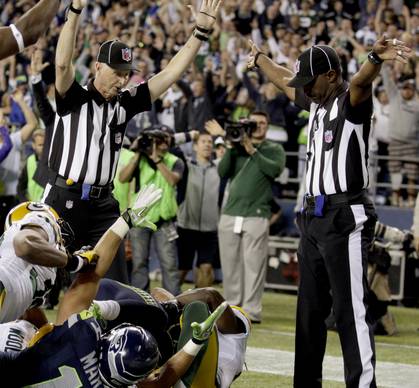
Boycott the NFL--its merchandise--until the refs are back

Problem: if you care enough about the NFL to be mad about the replacement referees, you're probably not going to stop watching or playing fantasy football.

Solution: Boycott something else. NFL.com is the official website. Don't go there. Don't buy team apparrel, even if someone on your Christmas list wants them.
If NFL.com traffic and sales dropped 50%, they would notice.


Problem: No one is going to read this post who cares, and no one else seems to be calling for this.